
Grok 4.5 Refines Compute Efficiency to Challenge the Frontier of LLM Economics
On July 8, 2026, SpaceXAI launched Grok 4.5, an “Opus-class” model trained specifically for coding and agentic tasks. The release represents a major milestone. It is the first tangible asset to emerge from the company’s recent 60 billion acquisition of Cursor. By delivering high-throughput inference at 2 per million input tokens, the architecture addresses steep resource constraints. Developers now have a cheaper option. Analysis of the official grok 4.5 benchmarks reveals a highly optimized Mixture-of-Experts (MoE) system that prioritizes task-completion efficiency over raw metric dominance.
Key Takeaways
- Grok 4.5 represents the first joint model release from SpaceXAI following its $60 billion acquisition of AI coding platform Cursor.
- The model operates at an aggressive pricing tier of 2 per million input and 6 per million output tokens, undercutting traditional frontier competitors.
- Independent assessments show a highly variable performance profile that changes significantly based on the evaluation harness employed.
- Training relied heavily on reinforcement learning over complex coding environments built on tens of thousands of NVIDIA GB300 GPUs.
Architecture & Training

Grok 4.5 is a Mixture-of-Experts (MoE) model trained jointly by SpaceXAI and its newly acquired unit, Cursor, using trillions of tokens of interaction data. This dataset captures how developers interact with codebases, edit files, and utilize terminal commands in real-world environments. The focus remained broad. SpaceXAI deliberately designed the model to maintain a diverse training mix. The pretraining corpus includes high-quality scientific publications, mathematics databases, and legal research papers. This prevents the system from overfitting to syntactical code patterns at the expense of general reasoning. In my view, prioritizing diverse data sources over pure engineering benchmarks is a necessary correction to the industry’s coding myopia.
How did the team structure this training run? SpaceXAI utilized a distributed agent system to construct complex reinforcement learning (RL) environments at scale. In these simulated setups, the model had to investigate multi-step software bugs, execute terminal actions, and verify its own outputs against test suites. The process worked. The training loop integrated automated scoring systems with model-based critiques, allowing the network to learn from its mistakes over hours-long reasoning sequences. This RL strategy focused heavily on per-token intelligence. The goal was simple: minimize the reasoning steps required to solve a problem. The distributed training setup also generated a wealth of data that helped refine the grok 4.5 benchmarks during development.
The model launches with a 500,000-token context window. Elon Musk announced that SpaceXAI will upgrade this limit to 1 million tokens next week. Context expansion is a common tactic. However, its utility depends on retrieval accuracy and planning efficiency. In the case of Grok 4.5, the context window is backed by highly optimized routing mechanisms within the MoE framework. This prevents the computational degradation that often occurs when parsing massive repositories. The integration with Cursor allows the model to index local codebases directly, pulling relevant files into active memory.
While raw architecture dictates baseline processing, the model’s actual utility is best understood through the lens of grok 4.5 benchmarks. These metrics show high efficiency. The MoE gating network activates only a fraction of the total parameters per token. This design keeps inference speeds high, averaging 80 tokens per second. Compute overhead drops. By routing queries to specialized sub-networks, the architecture keeps costs low. This structural optimization directly influences the model’s economic profile. It is a viable option for agentic loops that require continuous file execution and continuous feedback.
Scaling Laws & Compute Budget
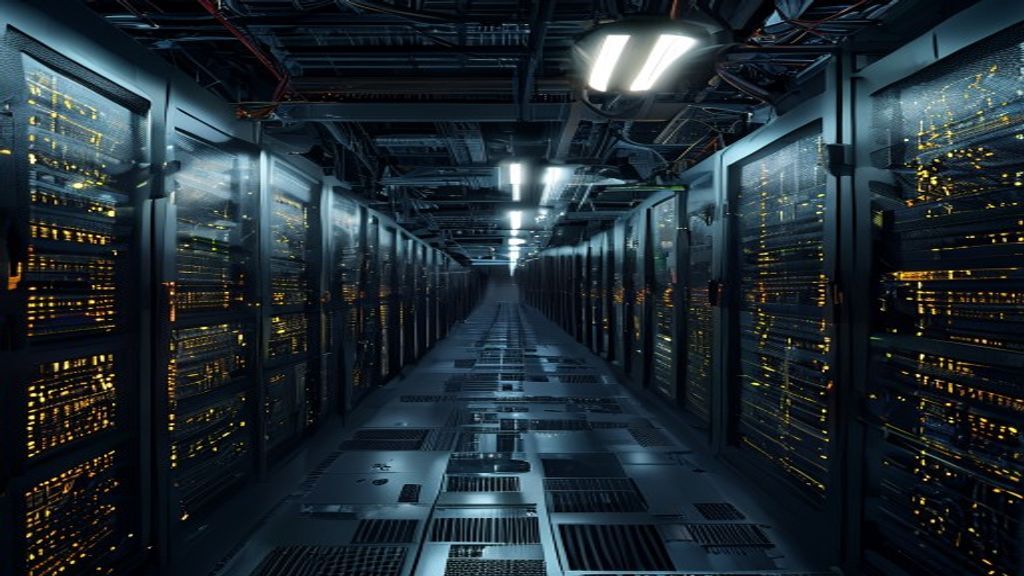
The Colossus supercomputer in Memphis served as the computational foundry for Grok 4.5. Powered by tens of thousands of NVIDIA GB300 GPUs, this cluster represents one of the largest concentrated blocks of AI compute in existence. SpaceXAI built this infrastructure specifically to support ultra-large-scale training runs without encountering the networking bottleneck that typically limits multi-node setups. The investment was massive. However, by optimizing communications at the hardware layer, the company achieved training stability over several weeks of continuous operation. Hardware optimization drove the strategy. This run highlights a physical scaling philosophy that relies heavily on custom network topologies and massive power delivery.
The compute budget behind the grok 4.5 benchmarks represents a shift from raw parameter growth toward targeted optimization. Rather than building a monolithic dense model, the engineering team pursued a highly sparse MoE layout. This approach allows the model to scale its theoretical capacity while keeping active compute per token manageable. Balance is key. Training an MoE model of this size requires careful balancing of expert capacity and routing stability. If the gating mechanism fails to distribute tokens evenly, certain experts become bottlenecks while others remain idle. SpaceXAI resolved this by introducing dynamic load-balancing loss functions during the pretraining phase.
How does the cost of this run translate to the consumer? The efficiency of the Colossus cluster, combined with the sparse architecture, allowed SpaceXAI to set prices at 2 per million input tokens and 6 per million output tokens. This undercuts Anthropic’s Claude Opus 4.8, which commands 5 per million input and 25 per million output tokens. It also sits far below OpenAI’s GPT-5.5 pricing structure. Silicon remains the primary bottleneck. This ecosystem includes the massive Tesla chip manufacturing gets massive boost with $119B plan initiative, which aims to secure long-term silicon independence. While raw hardware capacity is impressive, the economics of the grok 4.5 benchmarks show that efficiency is the real breakthrough.
The financial trade-offs are stark. While Anthropic and OpenAI have focused on maximizing raw reasoning capabilities regardless of token costs, SpaceXAI is betting that developers prioritize cost-per-task metrics. Running an autonomous coding agent that processes thousands of files can quickly accumulate thousands of dollars in API fees. The bills stack up fast. By offering a model that is significantly cheaper to run, SpaceXAI expects to capture the enterprise agent market. The training run was designed from day one to optimize this specific metric. In this context, the grok 4.5 benchmarks prove that low-cost inference does not require sacrificing fundamental capability. I believe this scaling strategy is more sustainable than high-premium alternatives.
An In-Depth Analysis of Grok 4.5 Benchmarks

The competitive environment for frontier models has grown increasingly complicated. Currently, the newly released grok 4.5 benchmarks paint a highly nuanced picture. SpaceXAI’s marketing highlights strong scores, but independent evaluations reveal that the choice of testing harness significantly alters the outcome. Harness design changes the story. When analyzing the grok 4.5 benchmarks on the Artificial Analysis Intelligence Index, Grok 4.5 achieved a score of 54. This represents a solid 16-point improvement over Grok 4.3. While this score places Grok 4.5 firmly in the elite category, it ranks fourth overall, trailing Anthropic’s Fable 5 (60), Claude Opus 4.8 (56), and OpenAI’s GPT-5.5 (55). The performance gap is notable.
To understand where the system excels, one must examine the specific coding and agentic benchmarks. On Terminal Bench 2.1, which measures command-line planning and execution, Grok 4.5 scored 83.3%. The margin is razor-thin. This nearly matches GPT-5.5’s score of 83.4% and sits just behind Fable 5’s 84.3%. However, the results diverge on more complex evaluations. On the DeepSWE 1.1 benchmark, which uses a neutral mini-swe-agent harness managed by DataCurve, Grok 4.5 scored 53%. This is well behind Fable 5 at 70% and GPT-5.5 at 67%. Interestingly, when evaluated under the provider-specific DeepSWE 1.0 harness, Grok 4.5 scored a much higher 62.0%. This discrepancy illustrates how custom evaluation harnesses can inflate performance metrics.
The table below outlines the core grok 4.5 benchmarks alongside its closest market rivals:
| Evaluation Metric | Fable 5 (Max) | GPT-5.5 (XHigh) | Grok 4.5 | Claude Opus 4.8 (Max) | GLM 5.2 |
|---|---|---|---|---|---|
| Artificial Analysis Index | 60 | 55 | 54 | 56 | 49 |
| DeepSWE 1.1 (Neutral) | 70.0% | 67.0% | 53.0% | 59.0% | 44.0% |
| DeepSWE 1.0 (Provider) | 66.1% | 64.31% | 62.0% | 55.75% | N/A |
| Terminal Bench 2.1 | 84.3% | 83.4% | 83.3% | 78.9% | 81.0% |
| SWE Bench Pro (Resolve) | 80.4% | 58.6% | 64.7% | 69.2% | 62.1% |
| Output Speed (TPS) | 45 | 60 | 80 | 30 | 75 |
| Input Price (per 1M) | 10.00 | 5.00 | 2.00 | 5.00 | $1.50 |
| Output Price (per 1M) | 50.00 | 30.00 | 6.00 | 25.00 | $4.50 |
The data reveals that while Grok 4.5 does not always lead on raw capability, its token efficiency and speed are highly competitive. For instance, on SWE Bench Pro, Grok 4.5 resolved 64.7% of issues. This is slightly behind Claude Opus 4.8’s 69.2% but ahead of GPT-5.5’s 58.6%. More importantly, the model achieved this resolution rate while utilizing an average of 15,900 output tokens per task. In comparison, Claude Opus 4.8 consumed approximately 67,000 output tokens to complete the same tasks. This represents a 4.2× reduction in token consumption. For developers running large-scale testing loops, this efficiency directly translates into substantial cost savings. From our perspective, harness divergence proves that benchmark optimization is now a defensive marketing tactic.
However, these grok 4.5 benchmarks are accompanied by some important caveats. First, SpaceXAI admitted that an earlier snapshot of the Cursor codebase was accidentally included in the pretraining dataset. The leakage occurred early. This data leak likely provides Grok 4.5 with an artificial advantage on CursorBench-adjacent tasks. The exact impact on the model’s generalized capability remains unclear, but it introduces a degree of uncertainty. Additionally, early developer feedback suggests the model can lack reasoning depth on certain highly complex, non-standard coding tasks. Indeed, GLM 5.2 often outperformed it.
This variable reliability highlights the ongoing challenges of deploying autonomous systems. As documented in VectorForecast’s analysis of AI Coding Agents: 3 Massive Failures in Production, even high-performing models frequently suffer from subtle planning failures under domain shift. The breakdowns were structural. In those production failures, agents failed not because they lacked syntax knowledge, but because they could not maintain an accurate state representation over long execution chains. The grok 4.5 benchmarks suggest that while SpaceXAI has improved raw generation speed, the fundamental bottleneck of agentic planning remains. Users must continue to monitor output quality closely.
Safety & Governance

Evaluating safety within the context of the grok 4.5 benchmarks requires looking beyond simple accuracy metrics to examine the model’s built-in defense mechanisms. SpaceXAI has implemented new safeguards specifically designed to mitigate the risks associated with the model’s advanced cybersecurity capabilities. The threats are real. Because Grok 4.5 excels at analyzing complex repositories and execution chains, it possesses the theoretical ability to discover and exploit novel software vulnerabilities. To prevent malicious utilization, the engineering team subjected the model to extensive pre-release red-teaming. These protocols focused heavily on preventing the generation of actionable exploit code while still allowing the system to assist in defensive patching.
The red-teaming reports associated with the grok 4.5 benchmarks outline several key mitigation strategies. SpaceXAI used a mixture of reinforcement learning with human feedback (RLHF) and automated adversarial testing to align the model’s outputs. Alignment is a dynamic target. When a user requests assistance with a potentially sensitive security task, the gating system routes the prompt through specialized alignment filters. If the intent is determined to be malicious, the model declines the request with a structured explanation. This approach aims to minimize false positives, which often render safety-aligned models useless for legitimate security researchers. However, maintaining this balance is incredibly difficult under creative prompting pressure.
Access to the model is governed by a multi-tiered distribution strategy that reflects these safety concerns. Grok 4.5 is currently available to developers through the SpaceXAI API console, Grok Build, and integrated directly into the Cursor environment. The distribution remains controlled. However, the model is closed weights, meaning external researchers cannot audit its internal parameters or training data directly. This closed-source distribution model is a point of contention among open-source advocates, who argue that public safety audits are necessary for frontier systems. SpaceXAI defends this choice by citing the risk of unregulated proliferation of agentic systems capable of autonomous execution. The restricted API tiers protect users, even as the public grok 4.5 benchmarks generate industry excitement.
Geographic restrictions also play a major role in the current rollout phase. Grok 4.5 is not yet available to users in the European Union due to ongoing regulatory compliance reviews. The delay is political. SpaceXAI expects to resolve these compliance issues and launch the model in the EU later this month. Regional governments are implementing stricter transparency rules. Consequently, providers must allocate more engineering resources to localized compliance. Furthermore, the grok 4.5 benchmarks for agentic tasks will undergo rigorous localized safety audits before the EU launch. I believe that geographic delays demonstrate a mature, albeit frustrating, approach to international compliance.
Trajectory (3–12 months)

Over the next three to twelve months, we expect the grok 4.5 benchmarks to plateau in terms of raw syntax accuracy while showing dramatic improvements in multi-step planning. The bottleneck is clear. The current bottleneck for coding agents is not their understanding of programming languages. Instead, it is their ability to execute long-running tasks without losing context or deviating from the initial objective. As SpaceXAI continues to integrate Cursor’s real-world usage logs into its reinforcement learning pipeline, the model’s capacity to handle multi-hour engineering tasks will likely improve. This will result in a more predictable execution flow for enterprise developers.
The market dynamics of frontier AI are undergoing a structural shift. The costs are soaring. With OpenAI’s valuation hitting historic levels following its public debut, documented in VectorForecast’s analysis of OpenAI Valuation Hits $1 Trillion in Historic Public Debut, the capital requirements for training the next generation of models have reached astronomical proportions. Providers can no longer afford to train massive models without a clear path to monetization. SpaceXAI’s strategy of launching Grok 4.5 at a highly aggressive price point is a direct response to this economic reality. They are sacrificing short-term margin to build developer lock-in.
Anthropic is pursuing a different trajectory. The company is actively focusing on securing custom hardware pipelines to scale its reasoning models, as analyzed in the report on Custom AI Chips from Samsung’s 2nm Node: A Massive Leap. Hardware matters. By designing proprietary silicon optimized for agentic execution, Anthropic hopes to maintain its performance lead on complex reasoning benchmarks. This creates a fascinating divergence in the industry. While Anthropic and OpenAI build bespoke, high-cost reasoning engines, SpaceXAI is using its massive, vertically integrated GPU clusters to offer “good enough” performance at a fraction of the cost. This choice represents a deliberate strategy to prioritize market share over the symbolic victory of topping the grok 4.5 benchmarks.
What does this mean for the competitive landscape? We will likely see a division of labor among enterprise buyers. Specialization is inevitable. High-risk, highly complex tasks like automated financial auditing or critical system architectural design will remain the domain of premium models like Fable 5 and GPT-5.6. Meanwhile, routine software maintenance, bug fixing, and boilerplate generation will shift toward highly efficient models like Grok 4.5. This division will prevent any single provider from establishing a monopoly on the enterprise AI market. The battle will be fought on the Pareto frontier of capability versus cost. By analyzing how the grok 4.5 benchmarks translate into real-world workspace applications, we can see the beginning of this transition.
As the codebase is optimized further, the grok 4.5 benchmarks for multi-step reasoning are likely to become the baseline for the industry. Other providers will be forced to match SpaceXAI’s pricing or risk losing their developer base. The pressure is building. This competitive pressure will accelerate the adoption of sparse MoE architectures across all major labs. The raw scaling of dense networks is rapidly yielding to highly curated, efficient systems that maximize performance per dollar. Optimization will outpace raw scale. In my analysis, the real victory in the model wars will go to whoever makes token volume irrelevant, not whoever reaches the highest benchmark score first.
Frequently Asked Questions
How do the grok 4.5 benchmarks compare to OpenAI’s GPT models?
The grok 4.5 benchmarks indicate that the model scores slightly below GPT-5.5 on raw intelligence but outperforms it on specific engineering tasks. This gap is narrow. GPT-5.5 scored 55 on the Artificial Analysis Index, while Grok 4.5 achieved a 54. Furthermore, Grok 4.5 is served at faster speeds and a fraction of the cost of OpenAI’s models.
What is the pricing and context window for Grok 4.5?
Grok 4.5 is priced at 2 per million input tokens and 6 per million output tokens, making it highly competitive. It features an initial 500,000-token context window. SpaceXAI plans to expand this limit to 1 million tokens next week. This combination of low cost and high capacity supports long-running autonomous agents.
Why is Grok 4.5 not available in the European Union?
The model is temporarily delayed in the EU due to regulatory reviews. SpaceXAI expects to resolve these compliance issues and launch the model in the EU later this month. Until then, API access remains restricted to non-EU jurisdictions.